
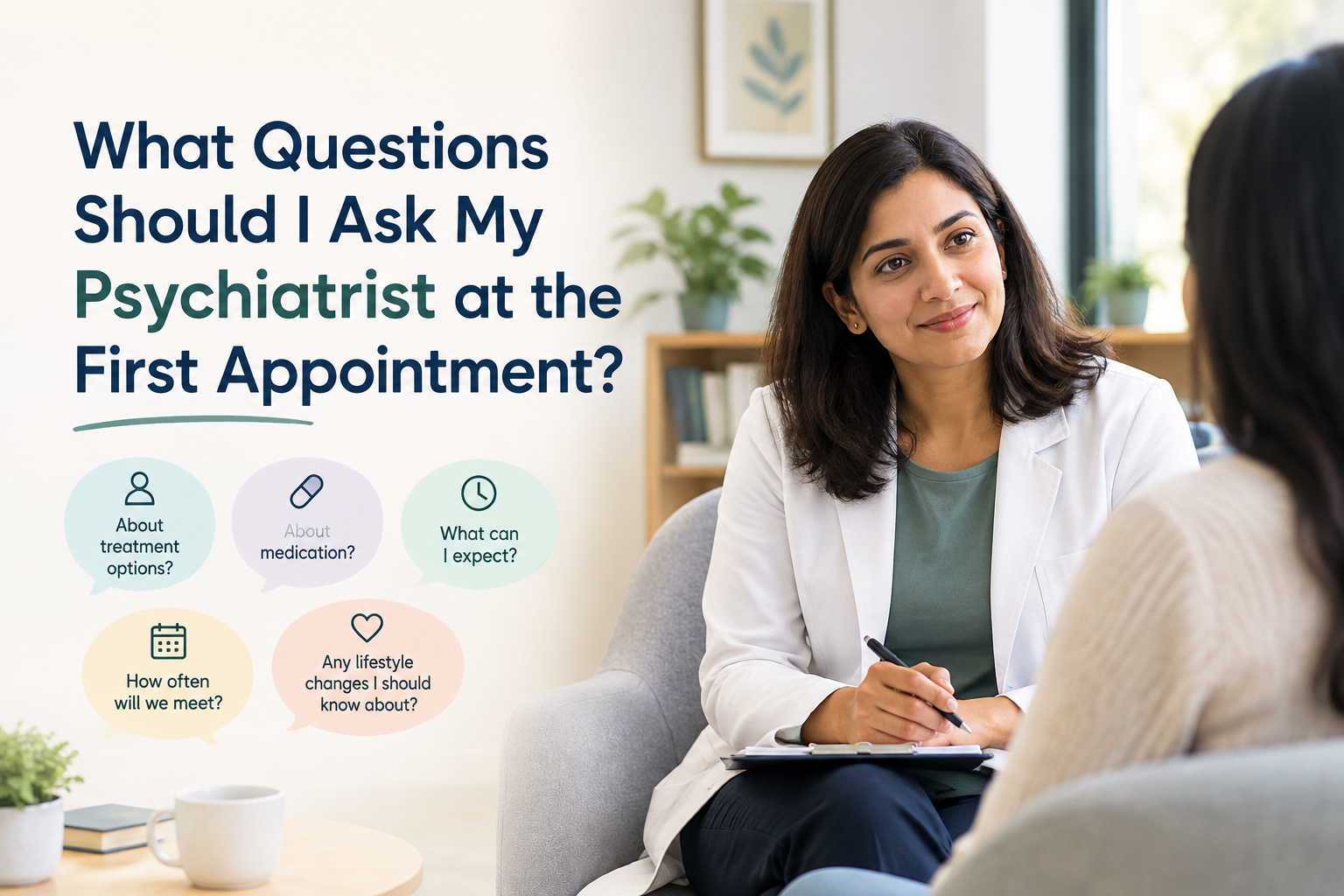
Making the decision to put your mental health first is a brave and life-changing decision. But as your first consultation approaches, it’s perfectly normal to feel a mix of hope, nerves and uncertainty. Walking into a clinic, or opening an online consultation room without knowing what to expect can leave anyone feeling overwhelmed.
If you are working on stress, mood swings, sleep or anxiety that has been around for a while, being prepared makes a huge difference. Knowing what to ask your medical pro will help you go from a passive listener to an active participant in your healing journey.
Here’s a complete step-by-step guide to your first evaluation and the important questions you should be asking.
Importance of Preparing Questions
An initial psychiatric evaluation is very different from a regular visit to a general physician. Instead of just taking your blood pressure or listening to your chest, a specialist will dig deeply into your emotional life, personal background, medical history and daily struggles.
If you come with a good list of questions prepared in advance:
-
You reduce session anxiety because you have a real guide in your hands.
-
You make sure that the conversation doesn’t forget important symptoms or fears.
-
You develop a collaborative relationship with your care team from day one.
-
You have full clarity about your diagnosis and the recommended treatment path.
A Real Life Example: Meet Rekha
To understand the power of preparation, let’s look at the story of Rekha, a 34-year-old mother and corporate professional living in Delhi.
Rekha had been suffering from exhaustion, panic attacks and a sense of dread that made it hard to focus on her work for months. She searched online for a reliable psychiatrist doctor for a complete medical evaluation for weeks. She also looked up options for a lady psychologist near me for therapy options for her mental health.
When Rekha finally got around to booking her consultation with top specialists, including notable female mental health experts like Dr Tejal Kothari, she felt a mix of relief and anxiety. She feared she would freeze, forget her main symptoms or be forced to take heavy medications right away.
To calm her nerves, Rekha spent the evening before her appointment writing five simple questions on a notepad:
-
What is causing these physical panic symptoms?
-
Is talk therapy enough or do I need medication too?
-
How can I track my progress over time?
-
Are there any modifications I should make right away that don’t involve drugs?
-
What if I experience side effects, how easy is it to reach the doctor or support team?
Sitting down for her consultation, Rekha felt an instant sense of control with that piece of paper in her hand. Instead of feeling helpless she methodically went through her worries. Her doctor reviewed each item, explained the difference between psychiatric care and psychological counselling, and designed a gentle, combined treatment plan. Rekha was grounded again within a matter of weeks, just because she knew what to expect and felt heard.
Just like Rekha, you can also take control of your healing process by asking the right questions at your session.
Questions to Ask at Your First Psychiatric Visit
1. Questions about Diagnosis and Understanding Your Condition
It’s important to know what’s going on inside your mind and body.
-
So based on what you told me, what’s your first impression or diagnosis?
-
Symptoms like brain fog, racing heart or extreme low energy can be caused by underlying biological, psychological or lifestyle factors.
-
Why ask: Knowing the clinical context helps demystify what you are feeling and removes self blame.
-
-
Could there be any medical issues causing my symptoms?
-
Why ask: Mental health is strongly correlated with physical health. A good doctor will often order some simple blood tests to rule out any organic causes.
-
-
How long do you usually see improvement with this condition?
-
Why ask: Realistic timelines help you to not get frustrated and be patient with your recovery process.
-
2. Questions about drugs and treatment options
If your treatment involves prescription medicine, you have every right to know what you’re taking, how it works and what to expect.
-
What are the benefits and potential side effects of the recommended medication?
-
Why ask: Knowing about mild side effects beforehand can help you not panic if you feel a little nauseous or fatigued during the first few days.
-
-
How long will I have to be on this medication?
-
Why ask: Many people fear that once they start taking psychiatric medication, they’ll never be able to stop. Treatment is usually short-term, with the goal of restoring stability.
-
-
Are there non-addictive options for my treatment?
-
Why ask: It’s perfectly okay to share your concerns about habit-forming drugs. Your doctor can advise you about the safety of modern treatments.
-
-
What do I do if I miss a dose or have side effects that are uncomfortable?
-
Why ask: Knowing the emergency protocol will put your mind at ease outside of clinic hours.
-
3. Questions regarding therapy and psychological help
Medication can help balance neurotransmitters but therapy deals with thought patterns, coping mechanisms, emotional triggers. Often the best results are from a combination of medical care & counselling.
-
Should I see a psychologist or counsellor in addition to our sessions?
-
Why ask: A medical specialist is focused on diagnosis and medical management, whereas a clinical psychologist provides structured talk therapy such as Cognitive Behavioural Therapy (CBT).
-
-
Can you recommend a certified lady psychologist nearby or a female psychiatrist for women’s mental health?
-
Why ask: A lot of women, especially those dealing with postpartum issues, trauma, or stress in their personal relationships, feel a lot more comfortable opening up to a female doctor or therapist. A trusted direct referral ensures continuity of care.
-
4. Lifestyle Questions and Practical Care Plans
Daily habits, work environment and sleep hygiene have a big impact on mental well-being.
-
What lifestyle changes can I make right now to support my mental recovery?
-
Why ask: Minor changes in sleep patterns, caffeine consumption, eating habits, and exercise may help you heal faster.
-
-
How often will we need to schedule follow-up appointments?
-
Why ask: How often you follow-up varies. Early on, visits may be bi-weekly and then change to monthly or quarterly as your condition stabilises.
-
What to Expect During Your First Visit
This is what a typical first consultation involves, to put your mind at rest:
-
Information Gathering: You will describe your current symptoms, how long they have been going on, and how they are impacting your work, relationships, and home life.
-
Medical & Personal History: The doctor will ask about your family’s history of mental health, your past physical illnesses and any medication you are currently taking.
-
Goals Talk: You will tell us what recovery means for you, whether that’s sleeping through the nite, reducing panic attacks, or being able to focus on work again.
-
Creating a Care Plan: Together, we will create a Care Plan that is personalised to you and may include lifestyle advice, therapeutic referrals, and/or medication management.
Frequently Asked Questions FAQs
What is the difference between a psychiatrist doctor and a psychologist?
A psychiatrist doctor is a medical doctor (MD, DPM or DNB in Psychiatry) licensed to practise medicine. He is able to perform physical examinations, diagnose complex conditions and prescribe medication treatment. Clinical psychologists are highly trained with a Master of Philosophy or Doctorate in Psychology and provide psychotherapy, counselling and specialised psychological testing. They do not prescribe medication.
Who are some of the top female mental health professionals I can talk to?
If you are looking for female specialists who understand the specifics of gender-specific emotional health, postpartum concerns or anxiety, consider experts like Dr Tejal Kothari (Consultant Psychiatrist) and renowned local counselling psychologists who provide empathetic, evidence-based care through in-person clinics and tele-consultations across India.
How long does the first appointment usually last?
First assessment is 45-60 minutes. This extra time allows the professional to get a good history and understand your situation without rushing.
What do I need to bring to my first appointment?
If you want emotional support, it’s helpful to bring a trusted family member or friend. It’s also helpful to bring a list of your current physical medications, any previous medical or psychiatric reports, and a notebook with your symptoms and questions.
Is everything I tell you in the consultation confidential?
Yes, clinical consultations are completely confidential. Mental health professionals are legally and ethically obligated to keep your information private. Information is only shared in the most extreme of circumstances where there is a clear and present danger to immediate safety.
If I feel more comfortable can I ask for a lady psychologist or female therapist?
Okay. You have to feel comfortable with and safe with your practitioner. This is a basic requirement for therapy to be effective. You can always say you prefer a lady psychologist or female psychiatrist when you book an appointment or tell your consulting doctor for a referral.
Final Thoughts
Seeing a mental health clinic or booking an online appointment is an act of courage and self-care. Remember, you don’t have to have all the answers before you walk through the door. Jotting down your main questions, being upfront about how you feel, and letting them know what you prefer, all help to set the stage for a positive treatment experience.
Rekha’s story can be your inspiration: make your list, take a deep breath and know that you have professional help from experienced specialists, be it an expert like Dr Tejal Kothari or your local psychologist, to help you get back control, clarity and joy in your life.




Comments (0)