
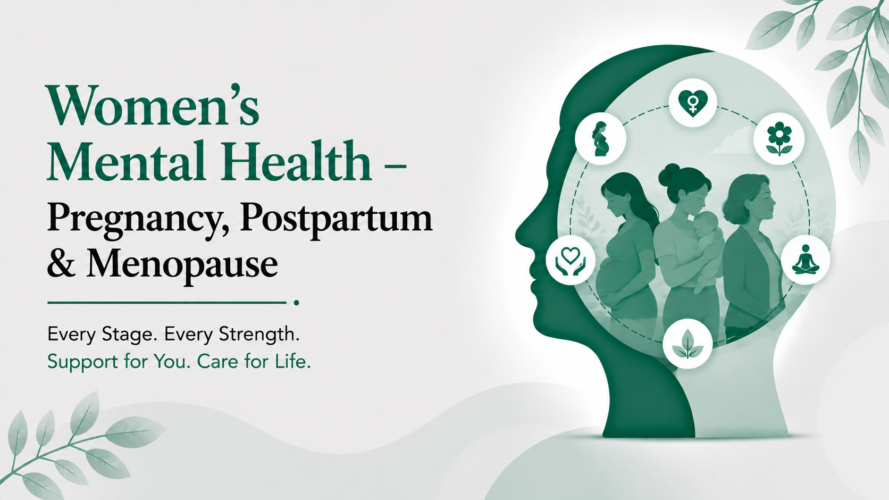
Women’s Mental Health – Pregnancy, Post Partum & Menapause
Dr Tejal Kothari on Evidence Based Mental Health Care | Online All India
Mental Health and the Reproductive Life Cycle
A woman’s life is characterized by major biological and hormonal changes. Pregnancy, the postpartum period and the transition from perimenopause to menopause are often viewed only in terms of physical changes, but they involve significant changes in the functioning of the central nervous system, in neurochemistry and in psychological well-being.
Changes in key hormones, especially estrogen and progesterone, directly impact neurotransmitters such as serotonin, dopamine and GABA that regulate mood, the ability to cope with stress, anxiety and sleep. These hormonal changes, combined with life stressors, sleep deprivation, and expectations from society, can lead to serious mental health problems.
Recognising that these changes are due to reproductive neurobiology and not personal failure is the first step in successful treatment, recovery and emotional balance in the long term.
Postpartum period: Perinatal mood and anxiety disorders (PMADs)
In the weeks and months after birth estrogen and progesterone levels fall, sleep is disrupted and the demands of caring for a newborn are overwhelming. Short term mood swings are to be expected but prolonged suffering requires systematic clinical intervention.
1. Baby Blues (“Post-partum Blues”)
It is estimated that about 80% of new mothers experience baby blues, which usually appear within days after delivery. Symptoms: Light mood swings, weepiness, irritability and anxiety. It is a self limiting condition, which usually resolves within 2 weeks with rest and reassurance and social support.
2. Post-partum depression (PPD)
PPD is much more than the baby blues and affects 1 in 7 mothers. It may develop during pregnancy or anytime in the first year postpartum. Symptoms are:
- Crying a lot or feeling sad, empty or hopeless most of the time.
- Difficulty bonding or relating to infant.
- Feelings of guilt, worthlessness or inadequacy as a mother.
- Loss of energy, trouble sleeping (even when baby’s sleeping), withdrawing socially.
3. Post-partum anxiety (PPA)
It’s normal to be concerned about a newborn but Postpartum Anxiety is characterized by constant uncontrollable fear and hyperarousal. Mothers may have racing thoughts, ongoing panic, physical restlessness, a rapid heartbeat and an inability to relax or let someone else care for the baby due to catastrophic worries.
4. Postpartum Obsessive-Compulsive Disorder (pOCD)
pOCD is defined by unwanted and intrusive thoughts or images (obsessions) that are usually about unintentional or intentional harm to the baby and are accompanied by extreme horror and guilt. To relieve this anxiety, mothers will engage in repetitive behaviors (compulsions) such as repeatedly checking on the baby, hyper-sterilizing things or avoiding being alone with the child. Note: Unlike psychotic disorders, mothers with pOCD are aware that these intrusive thoughts are unwanted and horrible.
5. Postpartum Post Traumatic Stress Disorder (PTSD)
Postpartum PTSD arises from traumatic childbirth experiences, such as emergency C-sections, severe maternal complications, premature delivery, or neonatal ICU admissions. Symptoms include flashbacks of the birth which feel intrusive, panic attacks that are intense when entering medical settings, nightmares and emotional numbness.
Perimenopause and Your Mental Health
Perimenopause is the transitional phase leading to menopause, and can last anywhere from 2 to 10 years. During this time estrogen levels don’t just drop – they go haywire, messing with brain chemistry and mood regulation.
Perimenopause: Major Mental Health Problems
- Perimenopausal Anxiety & Depression: Erratic hormonal dips can trigger new-onset depressive episodes or escalate pre-existing anxiety, often compounded by life stressors such as mid-career demands, parenting older children, or caring for aging parents.
- Worsening of premenstrual dysphoric disorder (PMDD): Women who are sensitive to hormonal changes may have an increase in symptoms of PMDD during perimenopause. Often this is accompanied by significant mood swings, anger, depression and panic attacks during the luteal phase of the menstrual cycle.
- Brain Fog & Executive Dysfunction: Estrogen levels directly affect cognitive function, leading to moments of forgetfulness, difficulty concentrating, and struggling with multitasking.
Menopause And Beyond: Long Term Well-Being
Menopause is diagnosed when a woman has gone 12 months without a period. This is when the ovaries’ output of progesterone and estrogen falls to a permanently low baseline.
Psychological & Physical Intersect:
- Depression risk increased: Studies show women at menopause have a higher risk of clinical depression than during their early reproductive years.
- Disruption of Sleep Architecture: Chronic sleep deprivation significantly worsens anxiety, irritability and depression. Frequent awakenings at night due to night sweats and hot flashes cause chronic sleep deprivation.
- Identity & Life Transitions: Existential suffering and loss of purpose may result from changes in the body, loss of reproductive capacity, the empty nest transition, and grief.
Evidence Based Clinical Care & Treatment Decisions
Mental health problems in reproductive transitions are a curable disorder. The comprehensive, evidence-based approach to treatment stabilizes neurobiology and provides relief.
1. Particular psychotherapy
- Cognitive Behavioral Therapy (CBT): Tries to change negative thinking patterns, handle intrusive thoughts in pOCD and develop successful methods to cope with anxiety and depression.
- Acceptance and Commitment Therapy (ACT): Helps women to cope with changes in life, to process physical and identity changes and to align actions with core personal values.
- Trauma Informed Therapy: Utilizes specific techniques to safely process birth trauma and medical distress.
- Neuro-Affirmative Care: Psychological support specifically for neurodiverse women (ADHD/Autism) with increased sensitivity to hormonal changes during pregnancy and menopause.
2. Medical Co-operation and Drug Treatment
- Evidence-Based Psychiatric Medications: When indicated and under expert supervision safe and effective, non-addictive medications (e.g. SSRIs or SNRIs) are prescribed to help regulate neurochemistry of the brain. (Drug regimens for pregnant and nursing mothers are carefully selected for safety).
- Hormonal & Multidisciplinary Coordination: Working with your OB/GYN or endocrinologist if hormone therapy (HRT) or reproductive medical care is part of your mental health treatment.
FAQ – Frequently asked questions
Up to 80% of new moms experience “baby blues,” which begin within days of birth and usually resolve on their own within two weeks with rest and support. Postpartum Depression (PPD) is more serious and lasts longer than two weeks. It won’t go away on its own and will seriously interfere with your ability to function, sleep, or bond with your baby.
Yes. The estrogen also helps to regulate neurotransmitters such as serotonin and GABA that keep the nervous system calm. As estrogen levels fluctuate unpredictably during perimenopause and drop during menopause, many women experience new-onset anxiety, panic attacks, or heighten stress reactivity for the first time in their lives.
No. Intrusive thoughts in pOCD are ego-dystonic, meaning they are completely opposite to your actual desires and values. Mothers with pOCD are terrified of these thoughts, and will often try to neutralize them with compulsive safety behaviors to protect their baby. They are not a sign of psychosis or a wish to harm the child.
Yes, with appropriate psychiatric supervision. Many psychiatric medications are relatively safe to use in pregnancy and lactation. A psychiatrist would weigh the risks of untreated maternal depression or anxiety (which can also impact fetal and infant health) against the small risks of medication to come up with a safe treatment plan.
Uncontrolled mood swings related to perimenopause can last throughout the transition period (anywhere from 2 to 10 years). But with the right psychological therapy, lifestyle changes and medical or psychiatric intervention, symptoms can be stabilised quickly without waiting for menopause to finish.
Regain Your Health & Well-Being
You don’t have to take emotional distress, severe anxiety, or chronic exhaustion as an inevitable tax of womanhood, motherhood or aging. Individualized, evidence-based care can help you navigate all reproductive transitions with clarity, strength and peace of mind.
Are you prepared to put your mental health first at all stages of your life?
Book an Appointment with Dr. Tejal Kothari Today | Get Personalized Women’s Mental Health Support