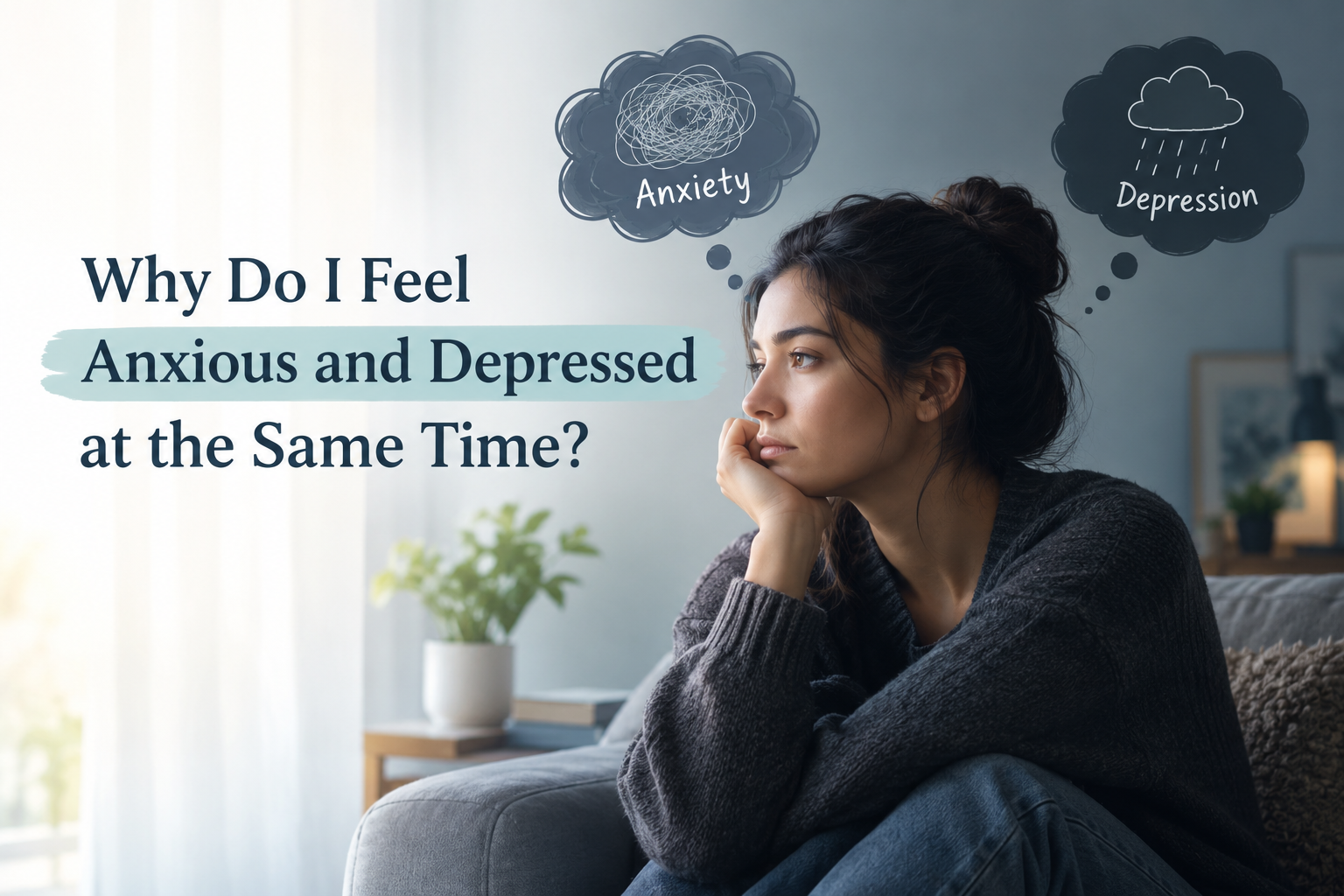
Are you ever unhappy with your present life and worried about your future? You could have a job, a family, a good income and all that goes with what people consider a successful life. But still there’s something missing in you. You keep thinking to the future, trying to relax and sometimes feel emotionally drained without knowing why.Perhaps you are thinking, “Why do I feel anxious and depressed at the same time? I have so many things to be grateful for, why do I still feel this way?”
The first thing you need to know is that a good life on the outside doesn’t mean you can’t struggle emotionally on the inside. Anxiety and depression can affect people in all sorts of situations, including people who appear happy and successful to everyone around them.
For one thing, chronic stress and unresolved issues can create pressure to keep up with life all the time. But there are also other possible causes. Mental health is complicated and everyone’s journey is different.
Can You Have Anxiety And Depression At The Same Time?
Yes, anxiety and depression can occur together.
Anxiety is often described as excessive worry, fear, nervousness or a feeling that something bad is going to happen. Signs of depression include feeling sad, hopeless, tired, low energy or not interested in things that used to bring you happiness.
When the two overlap, a person may feel mentally restless but emotionally drained all at once.
For example, you might spend hours worrying about your job, your finances or your family’s future. You want to fix your problems but you’re so tired that the first step is a struggle.
You have questions in your mind and you don’t have the mental energy to face the answers.
You can be worried about tomorrow, struggling to enjoy today.
It can be a confusing experience, especially if you don’t know why you are feeling this way.
1. Long-Term Stress Can Be Bad For Your Mental Health
Consider someone who has been under pressure for months.
They wake up every day with thoughts of work still to be done, financial obligations, targets, deadlines, and the fear of losing their job. Even when they get home, they are still thinking about work.
They may be with family but their mind could be on tomorrow’s responsibilities. They might try to sleep, but their thoughts keep going around and around.
Sometimes they might tell themselves this is normal. Everyone has responsibilities. Everyone has hard work.
But prolonged stress, and lack of rest or support, can take a toll on your emotional health.
They might get irritable, have difficulty concentrating, worry constantly or stop enjoying things they used to like.
They might start to feel hopeless about their situation over time.
But that’s not to say long-term stress automatically causes anxiety or depression. But chronic stress can cause mental health problems, particularly when multiple stressors accumulate.
Sometimes it’s not just the amount of work you have. There’s also the sense that you never get to mentally switch off.
2. Why Do You Feel Unhappy When Your Life Is Successful?
Food for thought.
Society tends to equate success with money, property, fame, a good career, and a comfortable lifestyle. When people see someone who has done these things they may think that the person has nothing to be worried about.
But how do we know what someone is experiencing internally just by looking at their lifestyle?
A person might be financially secure but lonely. Someone else might have a successful career and feel a constant pressure to keep it going. Someone else might have a loving family but have emotional problems they don’t know how to articulate.
Life’s comfortable things are valuable, but material comfort and inner peace are not the same thing.
In changing times it’s typical for people to run for years after the next thing. They want a better job, a bigger house, more money, more recognition, more status.
Set a goal and accomplish it. Then set another and accomplish it.
There’s always more to do.
In my own opinion, the society has been so obsessed with material success that we sometimes forget to ask ourselves if we are really at peace with our lives.
Success is not just in what you have done outside. It’s also about how you feel inside yourself.
Money and property can satisfy important needs and give security. But they can’t guaranty that you’ll never feel anxious, lonely, overwhelmed, or unhappy.
Sometimes a person needs rest and connection and time in nature and the opportunity to understand what’s going on inside of them more than they need another accomplishment.
This doesn’t mean money or ambition are wrong. It means we shouldn’t make material achievement the sole measure of a successful life.
3. The pressure to keep going can leave you exhausted
Think of a hard working person all week.
They wake up early, go to work, have meetings, responsibilities, and come home exhausted. They don’t relax but start to think about the tasks they haven’t finished and the work that is waiting for them in the morning.
Weekends may be spent worrying about their career or comparing their progress to the achievements of others.
When they see someone buying a house, getting a promotion, or starting a successful business, they may feel like they are falling behind.
Life creeps into a race, and stopping becomes akin to failure.
The person keeps moving because they think they need to do more to be happy.
But what if they finally get the thing they have been working for and they still don’t feel peaceful?
They may begin to doubt themselves. They might wonder why they’re not happy when things seem to be going so well.
In some people this cycle can contribute to ongoing stress, anxiety or low mood.
The solution is not to quit working, or to abandon your ambitions. Work, financial security, personal goals matter.
The important thing is knowing when the pursuit of success starts to take the fun out of your life.
You deserve a life outside your obligations as well.
4. Why People Do Not Get What You Are Going Through
One of the hard things about anxiety and depression is that other people can’t always see what you’re going through.
You can keep going to work, talk to friends, pay your bills and fulfilll your responsibilities. From the outside, your life may appear perfectly normal.
But inside you might be struggling with persistent worry, sadness, fatigue or a feeling of emptiness.
If you try to tell someone how you feel, they might say:
- ‘You’ve got a good job. What are you afraid of?
- “You have everything, so be happy.
- “Don’t overthink it.”
- “Think positive. Everything will work out.”
Such statements may be well-meaning, but they do not necessarily get to the heart of the person’s difficulties.
Sometimes you can’t tell someone who is hurting emotionally to ‘look at the good things you have’.
You can be grateful for what you have but still have mental health issues. You can feel grateful and also be in emotional distress.
Don’t judge people by their circumstances, listen to them instead.
Sometimes people need a safe place to say what they feel without being told they have no reason to feel that way.
And if you are the one feeling these feelings, remember you don’t have to prove your problems are serious enough to get support.
5. Anxiety Worries You About Tomorrow, Depression Makes Today Hard
Anxiety and depression can affect your thinking, feelings and reactions in everyday situations.
Anxiety can direct your attention to possible problems in the future.
You may think:
“What if they lay me off?”
What If I Can’t Make Ends Meet?
“What if something happens to my family?”
“What if all my hard work goes for nothing?”
You may be mentally preparing for something that might go wrong, even if there is no immediate problem.
Depression can make the present seem hard. You may have difficulty staying motivated, feel less pleasure in your usual activities, or feel hopeless about changing your circumstances.
When these two things occur at the same time, it can be particularly draining.
You are concerned about the future but struggle to find the energy to change your current situation.
Things need to change and you may not know where to start.
Bear in mind that anxiety and depression do not always follow this exact pattern. They can have different symptoms, different causes and different severity. Only a qualified professional is in a position to assess what may be happening in an individual case.
But understand the difference, and it can help you to recognize why you might feel worried and emotionally low at the same time.
6. Can spending time in nature and meditation be helpful?
I think one thing we forget a lot about modern life is our connection with nature and our need to slow down.
We are hours looking at screens, thinking about work, checking messages, planning our future and comparing ourselves to others.
How often do we give ourselves a little time without the pressure to achieve something?
Going outside, walking in a park, sitting under a tree, listening to the birds or just noticing the natural world can be an opportunity to slow down and reconnect to the present moment.
Some people find meditation can help them to develop awareness of their thoughts, practice attention and respond to stress more calmly.
You don’t have to start off with a complicated routine. You could start with some quiet minutes, gentle breathing, or a short walk without checking your phone every few seconds.
But meditation isn’t a cure-all for anxiety or depression, and it doesn’t work for everyone. For some, quiet meditation can be uncomfortable, especially when difficult thoughts become more apparent.
When that occurs, gentle movement, guided meditation, grounding exercises, or time with someone supportive might feel more appropriate.
Spending time outdoors and meditation can be helpful parts of caring for your mental health, but they shouldn’t replace a professional assessment and treatment when needed.
You’re not trying to run away from your responsibilities. It is to make room in your life where your mind does not have to be preoccupied with them at every moment.
7. What To Do When You Are Anxious And Depressed At The Same Time?
If you see yourself in any of these examples, you don’t need to fix all the problems today.
First, admit to yourself what you are feeling.
Be aware of your feelings
Instead of just telling yourself that you should be fine, take a moment to really understand what has changed.
Has the work been under constant stress? Do you have an unresolved relationship problem? Do you find that the things you used to care about you don’t enjoy anymore?
You don’t have to come up with one perfect explanation right now. Step one is to admit that your feelings deserve attention.
Talk to Someone You Trust You
You may feel like you have to do everything yourself, especially if you are the person that others usually rely on.
But you don’t have to face every problem alone.
Talking honestly with a trusted friend, family member or other supportive person can help you feel less alone. You can tell them what you are going through and not expect them to solve every problem.
Break Down Large Problems into Smaller Steps
When you have a bunch of things all piled up, the whole thing can feel unmanageable.
Don’t try to fix everything all at once, find one small step.
If you have a lot of work, make a list of priorities first. If you have money worries, work through one section of your budget. If you feel like you’re not connecting with people, consider reaching out to someone you trust.
Small steps will not make everything better, but they sure can make a tough situation feel much less overwhelming.
Give Yourself Time to Rest and Do What You Care About
Rest is not something that is earned after all the work is done.
Make sure you get enough sleep, exercise regularly, and engage in activities and relationships that give your life meaning and help you feel connected.
If you can, try to remove yourself from work notifications and the constant comparison to other people.
Your life should be more than just a series of tasks and achievements.
Don’t Be Shy About Asking for Professional Help
If you are feeling anxious or low and are struggling to cope, or if this is beginning to impact your sleep, relationships, work or daily activities, you might want to consider speaking to a qualified mental health professional.
You might want to discuss what you’re experiencing with a psychologist, psychiatrist or other appropriately qualified clinician to help assess your symptoms and discuss appropriate treatment options.
You do not have to wait until you are at a breaking point to seek help.
It’s not a weakness to ask for help from professionals. It is a way of making sense of what you are going through and finding a way of doing things that suits you.
If there is an immediate risk that you might hurt yourself or are unable to keep yourself safe, please call local emergency services or a crisis support service.
8. You Don’t Have to Pick Between Success and Peace
There is nothing wrong with wanting a good career, a comfortable home and a better future for your family.
These things can be big and important.
The problem starts when we think that the only way to make our lives worthwhile is to achieve more.
We can get so focused on the push for the next milestone that we forget to check in with how we are feeling along the way.
Take a moment and ask yourself a few questions:
- Am I working on something that is important to me or am I always trying to meet other people’s expectations?
- do I have time to enjoy what I have already achieved?
- Can I have a guilt-free break?
- Am I paying as much attention to my emotional health as I give to my career and responsibilities?
There are no universal answers to these questions. Another person may have different priorities than you.
But it’s good to remember that your worth is not measured by your income, property, job title or social standing alone.
You can work toward your goals and still make time for rest, relationships, and mental health.
You can have ambitions without turning every minute into a race.
And you can ask for help when life gets hard even if other people think you got it all.
Conclusion: What is a Successful Life for You?
Why is someone anxious and depressed at the same time?
Both can sometimes be attributed to the ongoing stress, unresolved problems and pressure of everyday life. Sometimes, biological, psychological, social or medical factors may also be at work.
There is no single explanation that fits everyone.
But one more thing we should pay attention to: we should not take a person’s external success as telling us everything about their internal experience.
Society may prize money, fame, property and professional success. They can be useful but they are not the automatic guaranty of inner peace.
I personally believe we have to keep connected with ourselves and nature, instead of letting the chase for material achievement take over our whole lives.
More money or more stuff doesn’t always bring peace of mind. It may mean understanding ourselves, creating meaningful relationships, learning to manage stress and knowing when to ask for help.
And if you suffer from both anxiety and depression please don’t feel bad about yourself for feeling this way.
You’re not required to pretend everything is okay just because someone else thinks your life is okay.
Notice what you are feeling. Talk to someone you can trust. Start small. And get professional help when you need it.
A successful life is more than what you achieve. It’s also about the ability to live that life with meaning, connection and well-being.
FAQs (Frequently Asked Questions)
1. Why am I feeling so depressed and anxious?
Anxiety and depression can occur together for a number of reasons including chronic stress, unresolved life issues, difficult life experiences, and other psychological or biological reasons. You could be steeped in present day sadness, exhaustion or hopelessness and at the same time be constantly worrying about the future. If you find that these feelings are persistent or are interfering with your daily life, you might want to consider talking with a qualified mental health professional.
2. Can stress lead to anxiety and depression?
Yes, anxiety and depression are possible effects of chronic stress.” Emotional health can be affected by financial problems, relationship problems, family responsibilities and ongoing work pressures. But stress is not the only possible cause and everyone’s experience is different.
3. Why am I unhappy when I have everything?
Emotional health has nothing to do with money, a good career, a family or material things. You may have achieved many of your goals but you may still feel lonely, overwhelmed, or disconnected from yourself. Inner peace does not mean financial success and feeling emotional pain is not a sign of being ungrateful for what you have.
4. Is work stress the cause of anxiety and depression?
If it interferes with your sleep, relationships, rest and ability to manage everyday responsibilities, constant stress at work can lead to anxiety and depression. You may be mentally drained from constantly worrying about deadlines, job security, or financial obligations. If you know you are under pressure and you are getting the right support, it can help you to cope with the pressure.
5. Can anxiety cause depression?
Feeling anxious all the time can be exhausting and may be linked to low mood, especially if the anxiety is affecting your sleep, relationships or daily tasks. But anxiety does not always result in depression. If you’re experiencing symptoms of both a qualified mental health professional can help evaluate you.
6. Is meditation good for anxiety and depression?
Meditation can teach people how to cope with stress, become more aware of their thoughts and learn skills of relaxation. Getting outdoors in nature can also help mental health, and gentle breathing exercises and mindfulness can also. But meditation is no cure-all, and shouldn’t be a substitute for professional treatment when it’s needed.
7. How to deal with anxiety and depression naturally?
Helpful habits may include: sleeping at regular times, being physically active, going outside, talking to people you trust, breaking big overwhelming things down into smaller steps. Practices like these can help mental well-being, but may not be enough by themselves. If you have severe or persistent symptoms, see a health professional for assessment and treatment.
8. When do I need help for depression and anxiety?
You might want to get help if your symptoms are persistent, hard to cope with or interfering with your work, relationships, sleep or daily activities. You don’t have to wait until you have bad symptoms. An appropriately qualified psychologist or psychiatrist can assess your needs and discuss appropriate treatment options.
9. Can an accomplished person be anxious and depressed?
Yes. Anxiety and depression can affect anyone, regardless of social status or walk of life. No one is immune to mental health issues, irrespective of how successful they are in their career, how rich they are, or how famous or high up in society they are. You can’t see someone’s external circumstances and know everything about them emotionally.
10. What’s the difference between anxiety and depression?
Worry, fear or anticipation of possible problems often is involved in anxiety. Depression can cause ongoing feelings of sadness , hopelessness , low energy , or lack of interest in activities . There is an overlap of symptoms and the two conditions may co-occur. A qualified health professional can help you to work out what may be causing your symptoms.




Comments (0)